One ordinary afternoon in your building, the lift stops working.
Residents start calling. The facility manager reaches out to the lift company. After a few back-and-forths, the reply comes: “The AMC expired last month.”
Someone on the OAM group chat asks, “Wasn’t that supposed to be renewed already?”
Nobody’s completely sure. And that uncertainty , that gap between what should have been tracked and what actually was , is exactly where the unexpected expense begins.
Just like that, the community is looking at an emergency repair bill nobody budgeted for.
If you sit on an Owners Association Management, this probably sounds familiar. Maybe a little too familiar.
Most residential communities in the UAE don’t lose money because someone’s being dishonest. They lose money because nobody has full, real-time visibility into their assets. And these assets ,lifts, generators, pumps, pool equipment, CCTV systems are worth significant amounts. Neglect them, miss a service, skip a renewal, and the financial hit comes fast.
Let’s break down exactly how this happens.
Why Poor Asset Tracking Quietly Drains Community Funds
Every residential community owns a long list of assets. Lifts. Generators. Water pumps. STP systems. Gym equipment. CCTV networks. Swimming pool systems. Transformers. The list keeps going.
When these aren’t tracked properly, money starts leaking , not all at once, but steadily, consistently, in ways that only become obvious when the bills arrive.
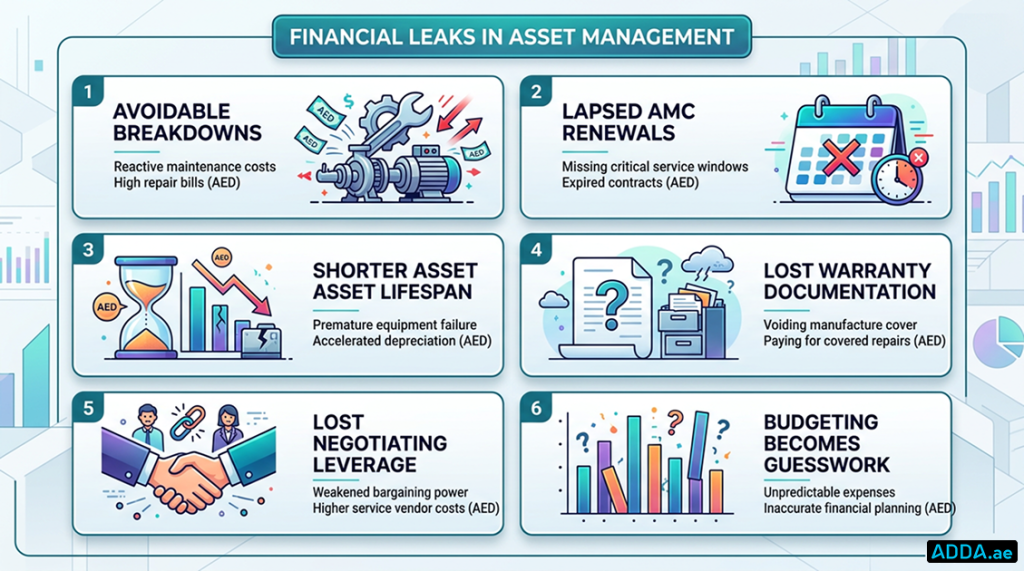
Breakdowns that could have been avoided: When service dates aren’t recorded, preventive maintenance gets skipped. A pump that needed a routine service costing a few hundred dirhams ends up failing completely. Now you’re looking at a full replacement. The machine wasn’t the problem. The tracking was.
AMC renewals that slip through: Annual Maintenance Contracts exist specifically to protect the community. But when renewal dates are sitting in someone’s inbox, a personal diary, or a spreadsheet no one opens regularly , they get forgotten. And once they lapse, the vendor is under no obligation to cover anything.
Shorter asset lifespan: Routine maintenance done on schedule keeps equipment running longer. Skip it repeatedly and a lift that should have run smoothly for 15 years starts causing problems at 10. That’s a capital replacement expense arriving years earlier than it should.
Warranty coverage that nobody can prove: Equipment is sometimes still under warranty when something fails ,but the invoice copy is missing, the email thread is buried, and nobody can locate the documentation. The vendor says the warranty period is over. The community pays again for something that should have been covered.
Losing negotiating leverage: When you only remember a renewal after it’s already expired, the vendor controls the entire conversation. Prices go up. Terms get worse. You’re negotiating from desperation, not from data. Track renewals in advance and you can compare vendors calmly, ask better questions, and push back properly.
Budgeting becomes guesswork: If you don’t know how old your major assets are or what condition they’re in, long-term financial planning is basically fiction. You can’t build reserves for replacements you can’t anticipate. Every large expense becomes a shock instead of something planned for.
None of this looks dramatic month to month. But stretched across three to five years, it adds up to a very large number.
What Happens When Asset Information Is Scattered Across People and Files
The way most communities currently manage assets isn’t really a system. It’s a patchwork.
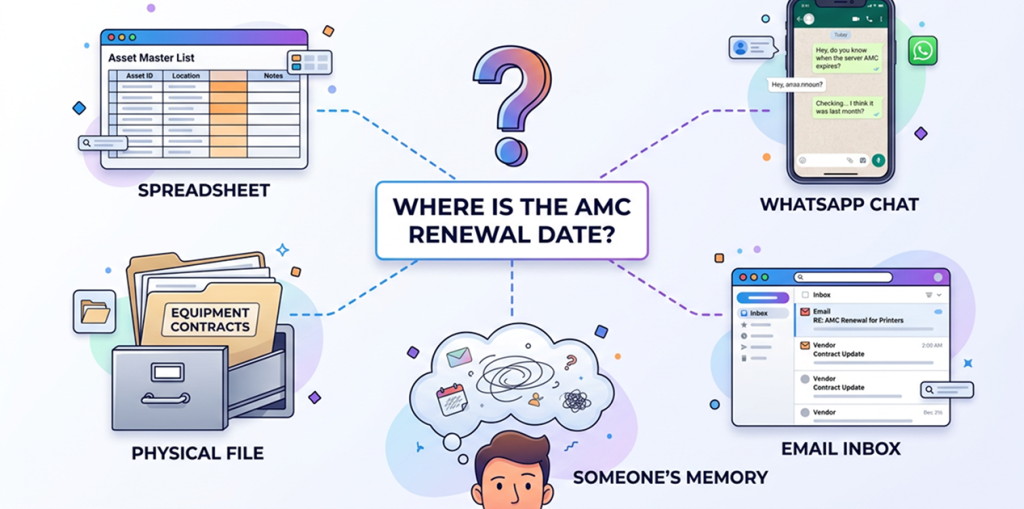
Some details are in a spreadsheet. Some are in physical files kept in the office. Some live in the facility manager’s memory. Some invoices are with whoever was treasurer two committees ago.
This creates real problems.
Knowledge walks out the door when committees change: A new OAM takes over and spends months just trying to understand what assets exist, which contracts are active, and what’s due for renewal. Service schedules get missed simply because nobody knew they were due. This isn’t negligence , it’s a structural gap.
Emergencies expose how much information is missing: Lift breaks down at 11pm. Nobody can immediately check when it was last serviced, whether the AMC is active, or who the right engineer to call is. Decisions get delayed. Residents get frustrated. The costs . financial and reputational pile up fast.
The whole operation depends on one person: If the facility manager leaves, the asset knowledge leaves with them. That’s not how a professionally run Owners Association should work. Systems need to outlast individuals. Records need to live somewhere everyone can access them.
Residential communities are meant to be run like permanent institutions. Asset tracking needs to match that permanence.
How Asset History Changes Vendor Negotiations
Here’s a practical scenario.
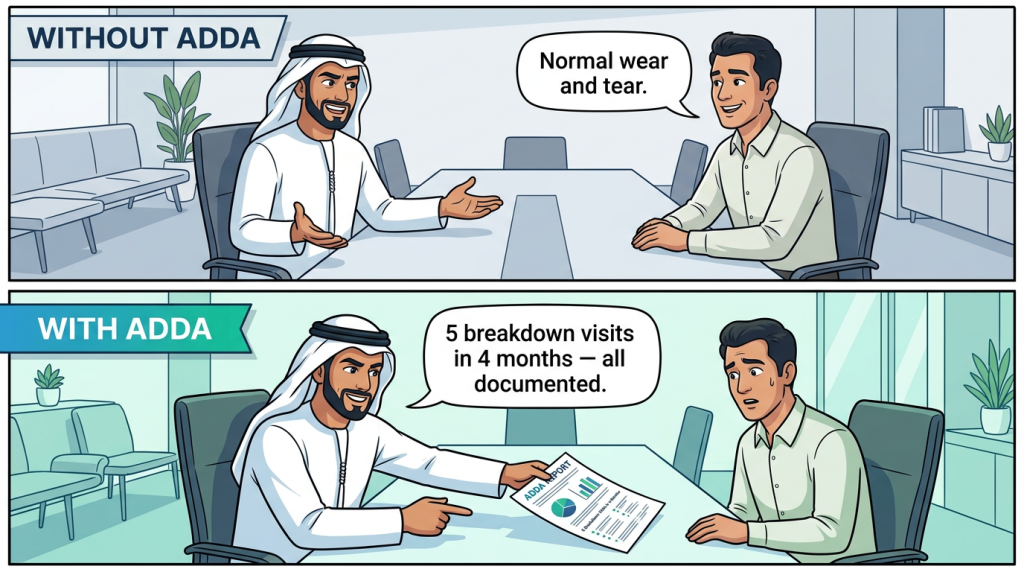
Residents keep complaining about one treadmill in the gym. It keeps malfunctioning. The vendor says it’s just normal wear and tear, nothing unusual.
Without structured records, the OAM can’t prove anything. They can’t show how many times it failed over six months. They can’t show the repair history. The vendor knows that , and uses it.
Now flip it.
Every complaint is linked to that asset. You can show the treadmill had five breakdown visits in four months. That completely changes the conversation.
Service history becomes negotiating power. Instead of arguing based on memory and frustration, you’re negotiating with documented facts. Vendors respond differently when you come prepared.
Replacement decisions become clear, not reactive. Sometimes repeated repairs cost more than a replacement. Without historical data, you’d never know. With it, the decision makes itself.
Good asset tracking doesn’t just protect money. It changes how professionally an Owners Association operates.
How Poor Asset Tracking Affects Accounting and Audits
Assets aren’t just physical items. They’re financial entries too, and when tracking is weak, the accounting consequences follow.
Depreciation becomes unreliable: Without proper purchase dates and cost records, depreciation calculations get messy. Messy depreciation creates complications in audits and community audits in the UAE are increasingly scrutinized.
Financial statements stop reflecting reality: Outdated or incomplete asset values mean the balance sheet is inaccurate. That makes long-term financial planning harder and gives residents less confidence in how funds are being managed.
Audit season turns stressful: Auditors ask for asset registers, purchase bills, depreciation schedules. When everything is scattered across files, emails, and the memory of people who may no longer be involved, the process becomes unnecessarily painful for everyone.
Structured asset tracking integrates directly with proper accounting practice, something ADDA’s accounting module supports in a way that makes reporting cleaner and audit preparation far less of an ordeal.
What It Looks Like When Asset Tracking Is Done Properly
In one large residential development, residents kept reporting low water pressure. Under the old approach, this would have triggered a round of random repair calls, some guesswork, and probably an unnecessary expense.
This time, the facility manager checked the asset record in ADDA instead.
What they found: the pump had a full service history on file. Multiple helpdesk complaints had been linked to that specific pump. The AMC was still active. And the vendor had missed one scheduled preventive check.
The complaint had been logged through the ADDA app. All tickets were visible in one place. With the documentation in hand, the OAMC escalated with the vendor formally. The vendor replaced a faulty component under the contract terms.
The community paid nothing extra.
Without that tracking, they would have replaced the motor entirely , a significant cost that was completely avoidable.
How ADDA Helps UAE Communities Track Assets Properly
ADDA’s Asset Management module is built specifically for residential communities , not generic businesses, not construction companies. Communities.
Here’s what it actually does:
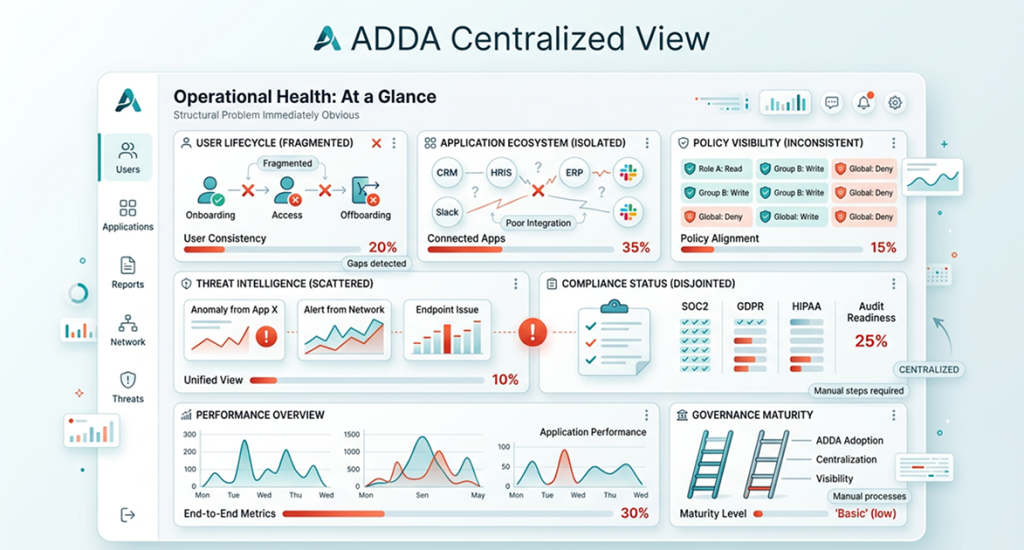
A centralized digital asset register: Every asset is recorded with purchase date, cost, vendor details, location, warranty period, and a unique asset reference. Nothing depends on memory or a folder nobody can find. New OAM members can get up to speed without spending weeks hunting for information.
Complete service and repair history in one place: Every service visit, repair job, and inspection is logged and attached to the relevant asset. Over time, this builds exactly the kind of documented history that helps OAMs make better, faster decisions , and negotiate from a stronger position.
Integration with the Helpdesk: When residents raise complaints through the app, those tickets are linked to the relevant asset automatically. Patterns become visible. Recurring issues get flagged before they become expensive failures.
AMC calendar with advance reminders: Renewal dates, service schedules, and payment timelines are tracked digitally. No more discovering a lapsed contract after the fact. The system reminds you in advance, giving you time to compare vendors and negotiate properly.
Depreciation tracking and accounting alignment: Asset costs and depreciation percentages are recorded in a way that makes financial reporting cleaner and audit preparation significantly less stressful.
QR-based on-site tracking: Maintenance staff can scan and update asset details on the spot, reducing manual errors and making sure records reflect what’s actually happening in the building ,not what someone remembered to type in later.
Communities that move to structured asset tracking typically see 20–30% reductions in maintenance-related costs. Not by cutting corners. By knowing what’s happening, acting early, and stopping small problems from becoming expensive ones.
The Long-Term Difference Disciplined Asset Tracking Makes
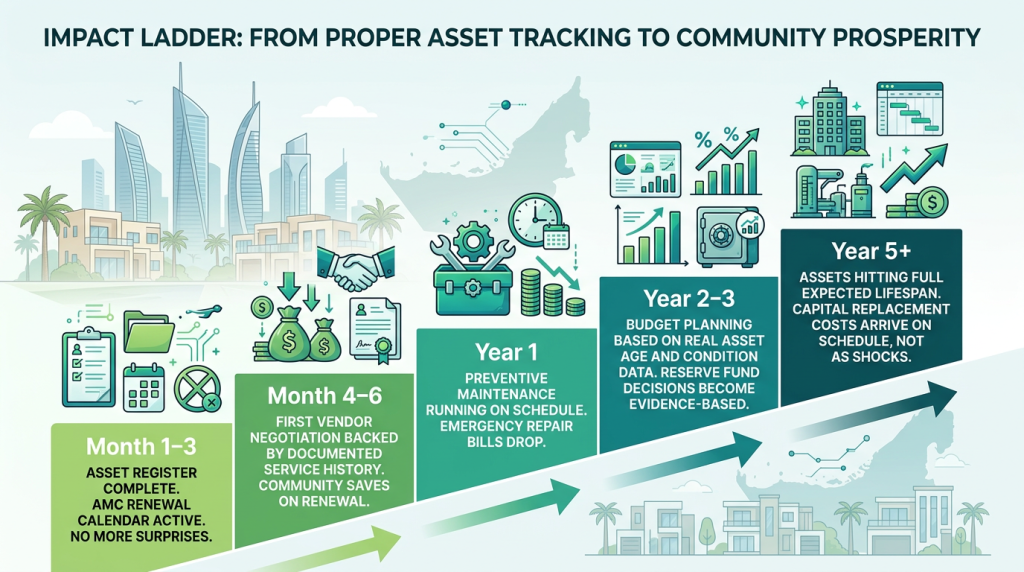
When asset tracking becomes a system rather than a habit, the whole operation of a community shifts.
Emergency expenses reduce. When you know the service history and renewal dates of every major asset, you’re rarely caught off guard. Sudden “urgent repair” bills stop being the norm. The budget stops being reactive.
Vendor conversations become professional. Sitting across the table with documented service records, complaint logs, and renewal dates changes the tone completely. You’re not arguing from frustration , you’re presenting facts. That matters.
Committee transitions stop being chaotic. When asset records are clear and centralized, incoming OAM members can pick up exactly where the previous team left off. Continuity improves. Mistakes don’t get repeated simply because nobody could find the information.
Budgeting becomes realistic. When you know how old your major assets are and what’s been spent maintaining them, you can plan replacements in advance instead of scrambling when something finally gives out. Building reserves becomes possible. AGM discussions become less confrontational because the numbers are actually grounded in something.
And there’s a property value angle too. Well-maintained infrastructure is noticed by residents, by prospective buyers, by tenants. Lifts that work. Water that arrives on time. Amenities in actual working condition. These things show in everyday living, and they show in what people are willing to pay. Good asset management may not appear on a marketing brochure, but its absence shows up fast.
A Simple Question for Every OAM
Do you want to keep fixing problems after they happen or prevent them from happening in the first place?
Most financial leaks in residential communities aren’t dramatic. They’re small, repeated, and avoidable. A missed renewal here. A skipped service there. An asset replaced ten years too early because nobody had the service history to know it could have been repaired.
If you want fewer surprises, stronger financial control, and smoother committee handovers, asset tracking is where that journey starts.
Explore ADDA for UAE Communities
Frequently Asked Questions
What assets should a residential community in the UAE track?
Everything with a service schedule or financial value, lifts, generators, pumps, STP systems, gym equipment, CCTV networks, pool systems, transformers, and even consumable stock like diesel or electrical supplies. If it can break down or needs renewal, it should be on the register.
Is asset tracking only necessary for large developments?
Not at all. Even a smaller community of 80–100 units may hold assets worth hundreds of thousands of dirhams. The size of the community doesn’t reduce the financial risk that comes with poor tracking.
How often should asset records be updated?
Every time there’s a service visit, repair, inspection, or replacement. Annual reviews also help verify that records match reality , especially after contractor changes or committee transitions.
Can structured asset tracking actually reduce costs?
Yes. Communities that shift from reactive repairs to preventive maintenance consistently report maintenance cost reductions of 20–30% over time. The savings come from catching problems early and negotiating from an informed position.
Who should manage asset tracking in an Owners Association?
The facility team handles day-to-day updates. The OAM oversees the process and uses the data for planning and governance. The key thing is that the system , and the records shouldn’t live in any one person’s head or phone.