When you walk into any residential community in the UAE, you’ll notice similar things everywhere. The clubhouse. The pool. Landscaped gardens, a gym that looks like it belongs in a five-star hotel, a play area for the kids. The towers themselves, gleaming and tall.
None of that is wasted on people. It’s genuinely what draws families in , the promise of a certain lifestyle, the picture of weekend mornings by the pool or evenings at the clubhouse.
But give it six months. Maybe a year.
Somewhere along the way, residents stop mentioning the size of the lobby. They stop bringing up the marble or the chandelier in the entrance. What they start talking about instead is far more mundane , and far more important. Did the maintenance request actually get resolved? Did anyone tell them the water would be off on Thursday? Do they even know their neighbours’ names yet?
That’s the real test of a community. Not the brochure. What happens after move-in, when the polish wears off and daily life takes over.
What Residents Actually Care About Once They’ve Settled In
Here’s the thing nobody wakes up thinking about luxury every single day. Most residents are just hoping the day runs smoothly. That’s it. That’s the bar.
A well-run community feels lighter to live in. Less friction, fewer “why didn’t anyone tell me” moments, more confidence that someone, somewhere, has things under control. Residents who feel informed tend to feel calmer. Residents who feel ignored tend to feel, well, ignored , and that shows up fast.
Over time this builds into something every Owners Association in the UAE wants but few manage to earn: trust.
Once that trust exists, everything else gets easier. The whole atmosphere shifts , more cooperative, less suspicious, more like an actual neighbourhood and less like a transaction. The building stops being a building. It starts being home.
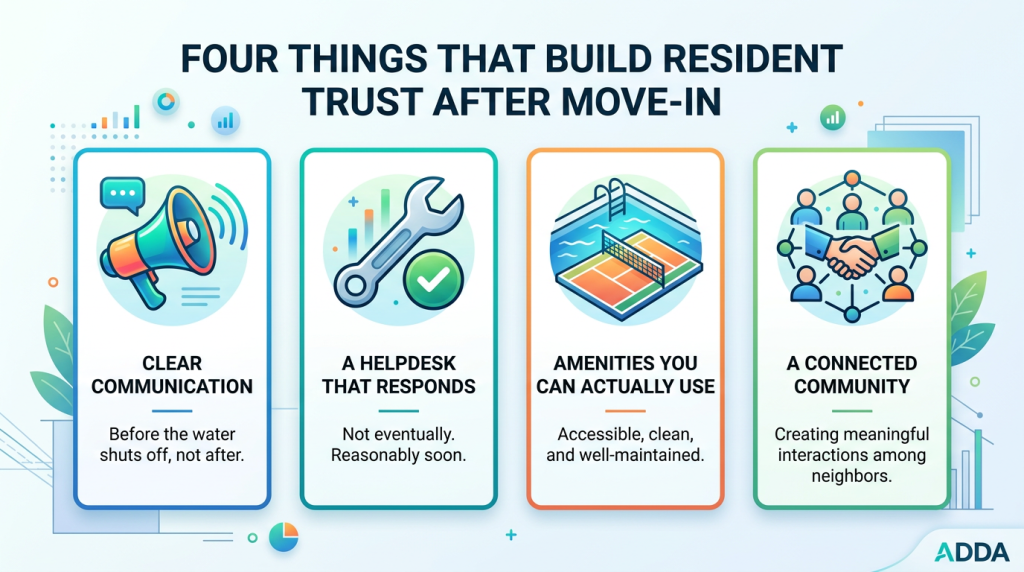
So what builds that trust? A handful of things, really.
Clear Communication
Did the water shutdown notice arrive before the water actually shut off, or after residents had already discovered it the hard way? Did anyone mention the lift would be out of service this weekend?
Communication isn’t only about the operational stuff either , it covers AGM notices, Owners Association elections, hobby classes, community events, rule changes. Anything residents would reasonably want to know before it happens, not after.
When that information arrives on time and isn’t buried in a pile of irrelevant notifications, residents simply feel more involved. It’s a small thing that adds up to a lot.
A Helpdesk That Actually Helps
In communities that work well, residents don’t have to fight to get heard. They raise an issue, a query, even a complaint , and someone actually responds. Not eventually. Reasonably soon.
That responsiveness does more for resident confidence than almost anything else on this list. Fast resolution quietly tells residents: someone here is paying attention.
Amenities You Can Actually Use
Amenities do improve quality of life , that part isn’t in question. A pool genuinely changes how a family experiences a weekend. A clubhouse gives people somewhere to gather. Gardens make the whole place feel less like concrete and more like somewhere you’d want to be.
But here’s the catch: amenities only deliver if they’re usable.
A clubhouse stops feeling premium the moment bookings turn into a free-for-all. A padel or tennis court loses its charm fast if it’s permanently “occupied” with no real system behind it. Community events land better when residents hear about them with enough notice to actually plan around them. Shared spaces feel welcoming only when someone’s keeping them clean.
Which is why some smaller communities, with fewer amenities, somehow feel nicer to live in than larger ones stacked with infrastructure. The difference, almost always, comes down to how things are run ,not how much there is.
Communities Where People Actually Know Each Other
Living in a community gets a lot more enjoyable once residents actually connect with one another. Hobby groups, neighbourhood buy-and-sell chats, local recommendations, shared celebrations during festive seasons ,these things sound small individually, but together they build a real sense of belonging.
And once that belonging exists, participation rises on its own. People show up to events. They chat in the lobby. They feel like their input actually counts for something , because, often, it does.
Where Does Digitalization Fits Into All This
As communities across the UAE get bigger and more layered, running them without proper systems becomes a genuine headache. Resident communication, complaints, maintenance, visitor access, billing, bookings, security , all of it requires constant coordination between Owners Associations, facility managers, and whichever contractors happen to be involved that week.
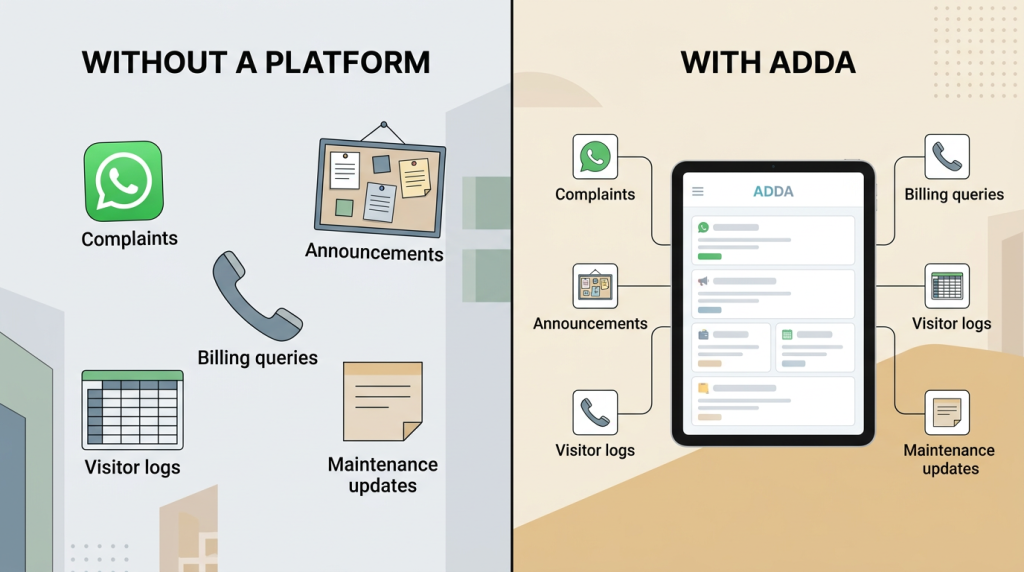
Skip the right systems and things slip. Information gets lost. Communication scatters across WhatsApp groups, noticeboards, and word of mouth. Residents start feeling like outsiders in their own building.
That’s largely why SaaS-based community management platforms have caught on so widely. Not because automation is trendy, but because it solves a real, everyday problem.
When residents can check information themselves, raise a concern in two taps, get timely updates, and actually participate in community life , the whole experience changes. Management teams feel it too. Operations get less chaotic. Communication sits in one place instead of five. Admin work stops swallowing entire afternoons.
Used properly, technology doesn’t replace the human side of community living. It just clears enough clutter for that human side to actually show up.
Why Ad-Funded Community Apps Tend to Let Residents Down
Here’s something worth knowing: not every community app is, at its core, a software company. Some are advertising businesses that happen to ship a community app as the delivery mechanism.
Their money comes from selling ad space to brands. Residents are the audience being sold.
You can probably guess what happens next.
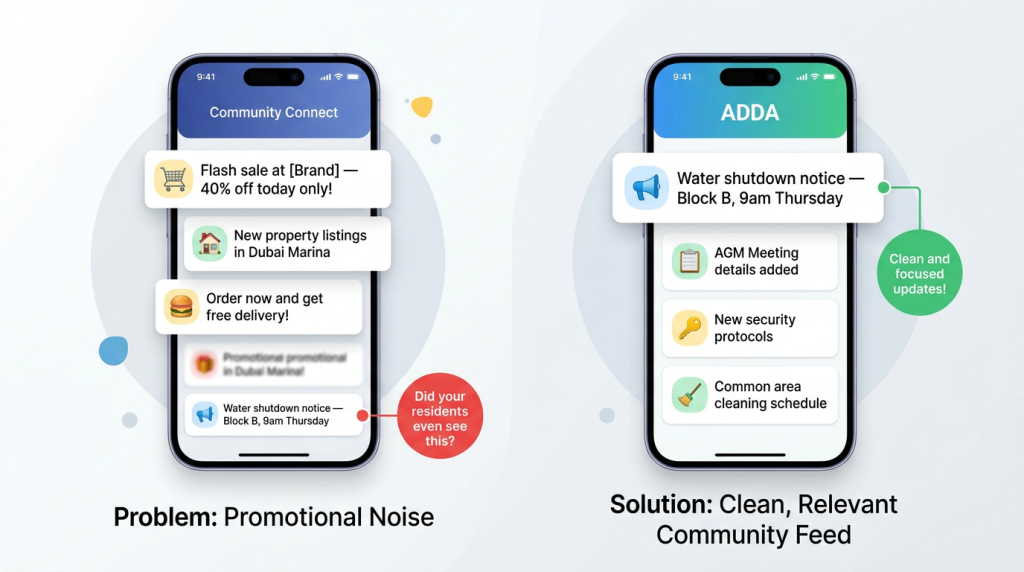
Notifications start filling up with promotions dressed up to look like community updates. Residents grow numb to the app, then suspicious of it, then they just stop opening it. Back to calling the facility manager directly. Back to messaging the Owners Association Management Committee (OAMC) on WhatsApp because, frankly, it’s faster and less annoying.
Once residents check out of the app, the whole connected-living idea quietly falls apart. Updates stop landing. Events go unnoticed. Complaints drift back into informal channels nobody’s tracking properly.
There’s a quieter issue underneath all this too. When advertising is the actual business model, the community management software itself rarely gets the investment it needs. It might look polished on the surface , but ask it to handle complex accounting, compliance, or multi-team coordination for a larger community, and the cracks tend to show.
Which is really the whole argument for choosing carefully. Communities need a platform built specifically for community management ,one where the community is the customer, not the inventory being sold to advertisers. When a platform’s success depends entirely on communities running better, it gets built that way, end to end.
So What Actually Creates a Great Living Experience?
People often pick a community for the amenities. Fair enough , that’s how it should work at first.
But what keeps them happy a year, two years, five years later is something else entirely. It’s whether things just work. Whether communication is clear instead of chaotic. Whether residents feel heard when something goes wrong. Whether the place feels connected rather than every household quietly fending for itself.
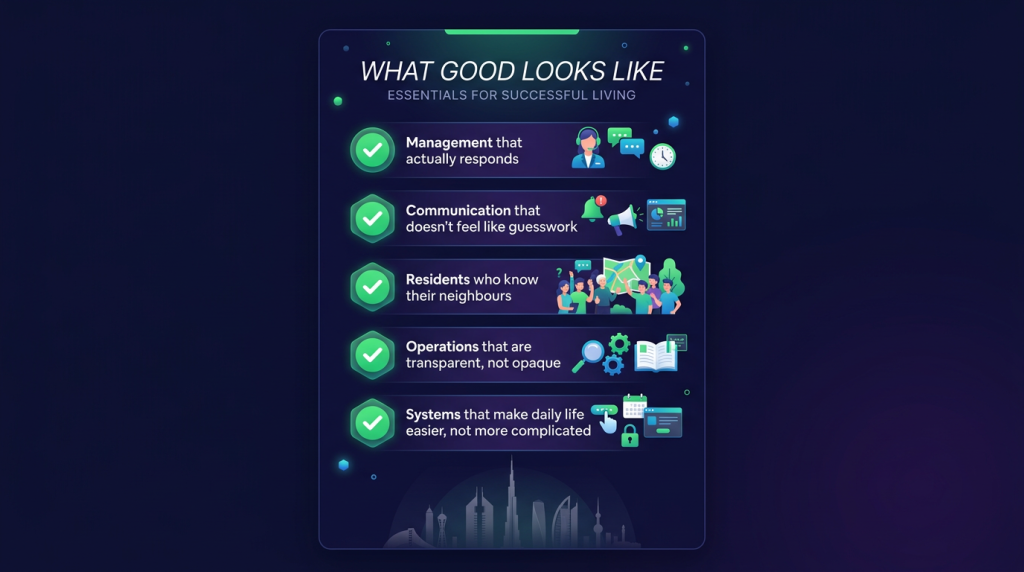
A few things tend to separate the communities that get this right:
- Management that actually responds
- Communication that doesn’t feel like guesswork
- Residents who know their neighbours
- Operations that are transparent rather than opaque
- Systems that make daily life genuinely easier, not more complicated
Building a Better Living Experience with ADDA
Better community living starts with smoother operations, clearer communication, transparent management, and residents who actually feel engaged , not just notified.
ADDA helps residential communities across the UAE handle the everyday running of things:
- Resident communication
- Complaint tracking
- Accounting and billing
- Visitor management
- Facility booking
- Maintenance coordination
- Community engagement tools
Whether you sit on an Owners Association Management Committee, manage facilities day to day, or represent an Owners Association as a whole, ADDA is built to help your community run more smoothly and stay genuinely connected.
FAQs
What makes a residential community great to live in?
Honestly, it comes down to the basics done well. Daily operations that run without drama, communication that actually reaches people, a management team that responds instead of disappearing, residents who feel part of things, and amenities that work in real life ,not just in the sales brochure.
Why does communication matter so much in residential communities?
Because nobody likes finding out about a water shutdown after their shower runs cold. When residents hear about maintenance, events, rule changes, and emergencies with enough notice, they trust the people running their community a lot more. Less guesswork, fewer surprises, more peace of mind.
How does technology actually improve community living?
Mostly by getting rid of the chaos. Instead of complaints in one place, visitor logs in another, and billing somewhere else entirely, everything sits together. That alone saves people time , and a fair amount of frustration they didn’t need in their day.
Why do residents stop using certain community apps?
Usually it’s the ads. The app starts out useful, then slowly turns into something closer to a promotional feed, and people just stop opening it. Once the noise outweighs the genuinely useful stuff, residents tune out ,fast.
How does ADDA support communities in the UAE specifically?
Pretty simply, really , ADDA gives Owners Associations and residents one dedicated platform for communication, accounting, billing, visitor management, complaint tracking, and amenity booking. No ads, no noise, just the things a community actually needs to run well.